We carry out external refurbishments across Rossendale, Lancashire and Greater Manchester – rendering, cladding, masonry repairs, painting and roofing that protect your property and transform how it looks from the street.
The outside of a building takes a battering from North West weather. Over the years, mortar washes out, render cracks, gutters fail and water finds its way in – and by the time damp shows up inside, the damage has often been building for a while. Well-planned external refurbishments fix the cause, protect the structure and make the property look cared for again.
Off Market Developments has worked on homes and commercial buildings across the region for more than 30 years. Our own masons handle stone and brick repairs, and we manage scaffolding, rendering, roofing and decorating as one project, so you have one team and one point of contact from inspection to handover.
We tailor every job to the building, but most external refurbishments involve some combination of the following:
New render systems and render repairs, from traditional sand and cement to modern through-coloured and silicone finishes that need little maintenance.
Timber, composite and other cladding to modernise tired elevations, add character to an extension or protect exposed walls.
Repointing in the right mortar – including lime for older stone and brick – plus replacing damaged bricks and stones and rebuilding unstable sections.
Preparation and painting of render, masonry, windows, doors and timber, using paints suited to the surface so the finish lasts.
Slipped or missing tiles and slates, ridge repairs, chimneys, and new fascias, soffits and guttering to keep water away from the walls.
Cracked walls, failed lintels, bulging stonework and other defects repaired properly before any new finish goes on.
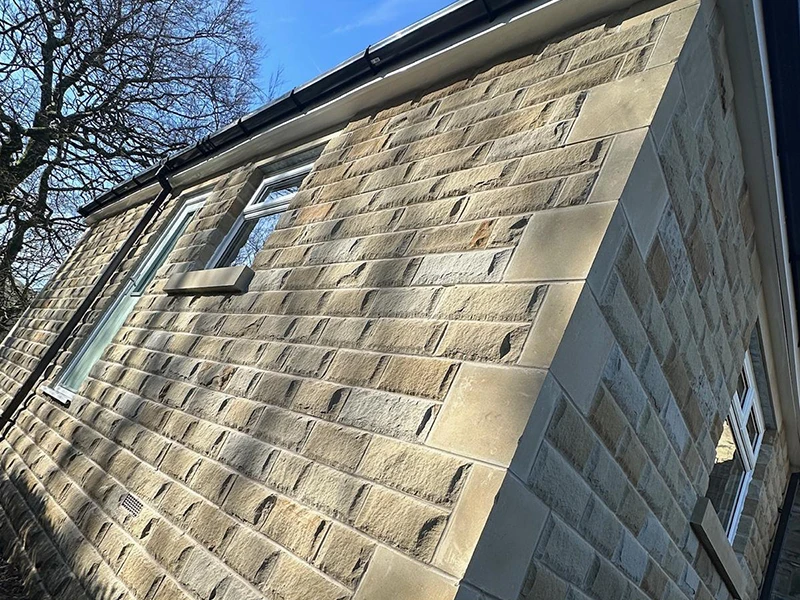
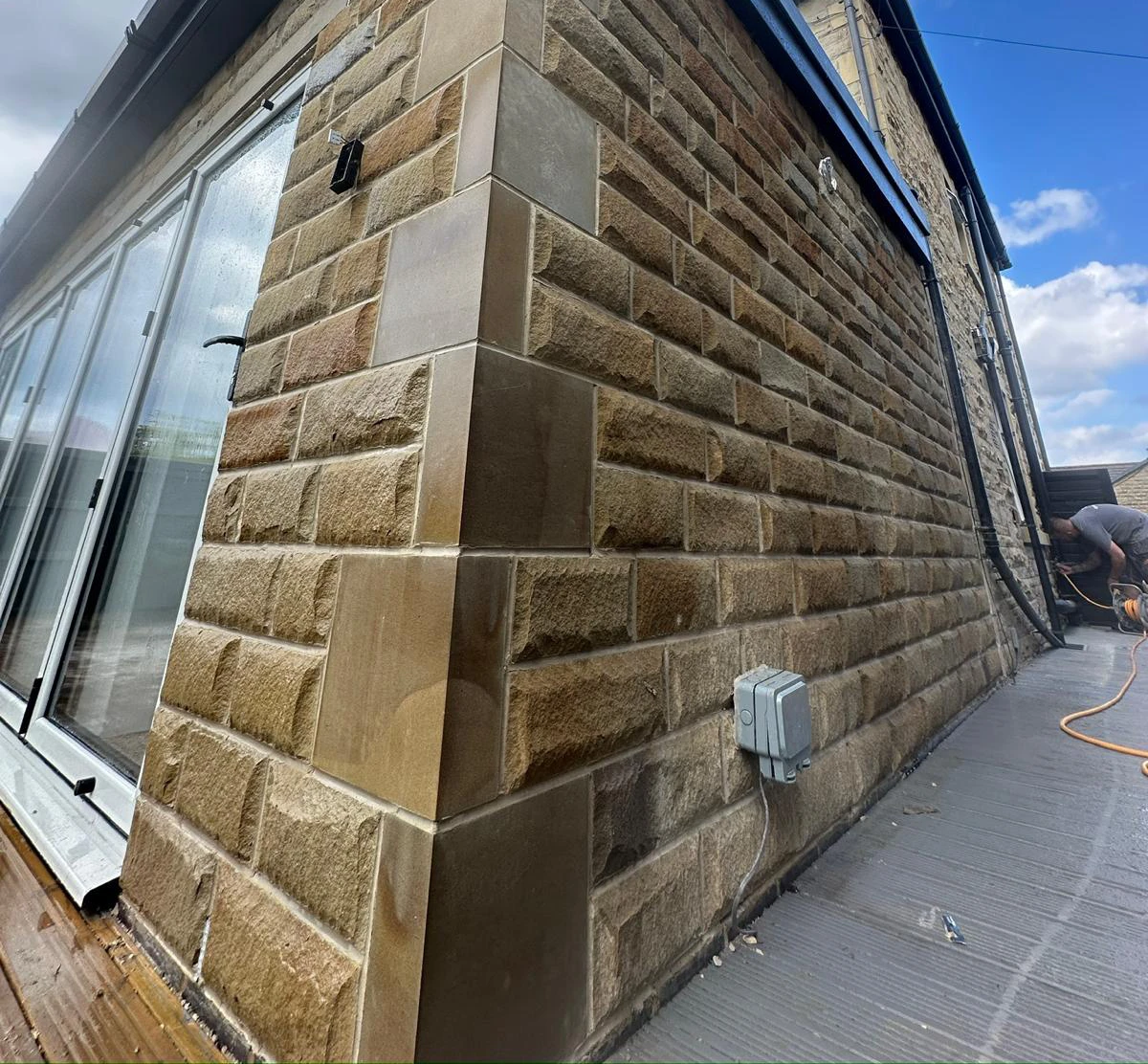
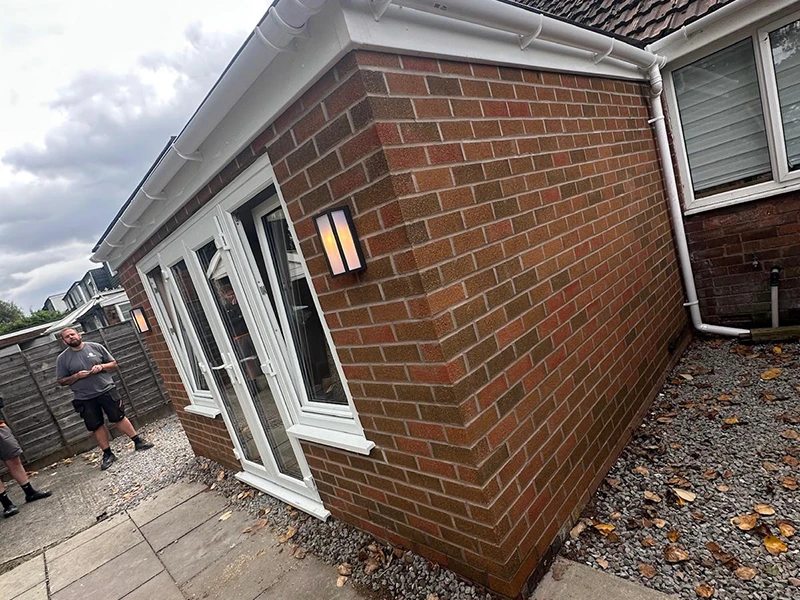
The most important part of any external work is understanding why the problem is there in the first place. Covering up a defect only moves it somewhere else.
We inspect the outside of the building, and the inside where there’s damp, to find the cause – whether that’s failed pointing, blocked gutters, cracked render or a structural issue.
We recommend the right repairs and finishes for the building, explain the options and give you a clear, itemised quote.
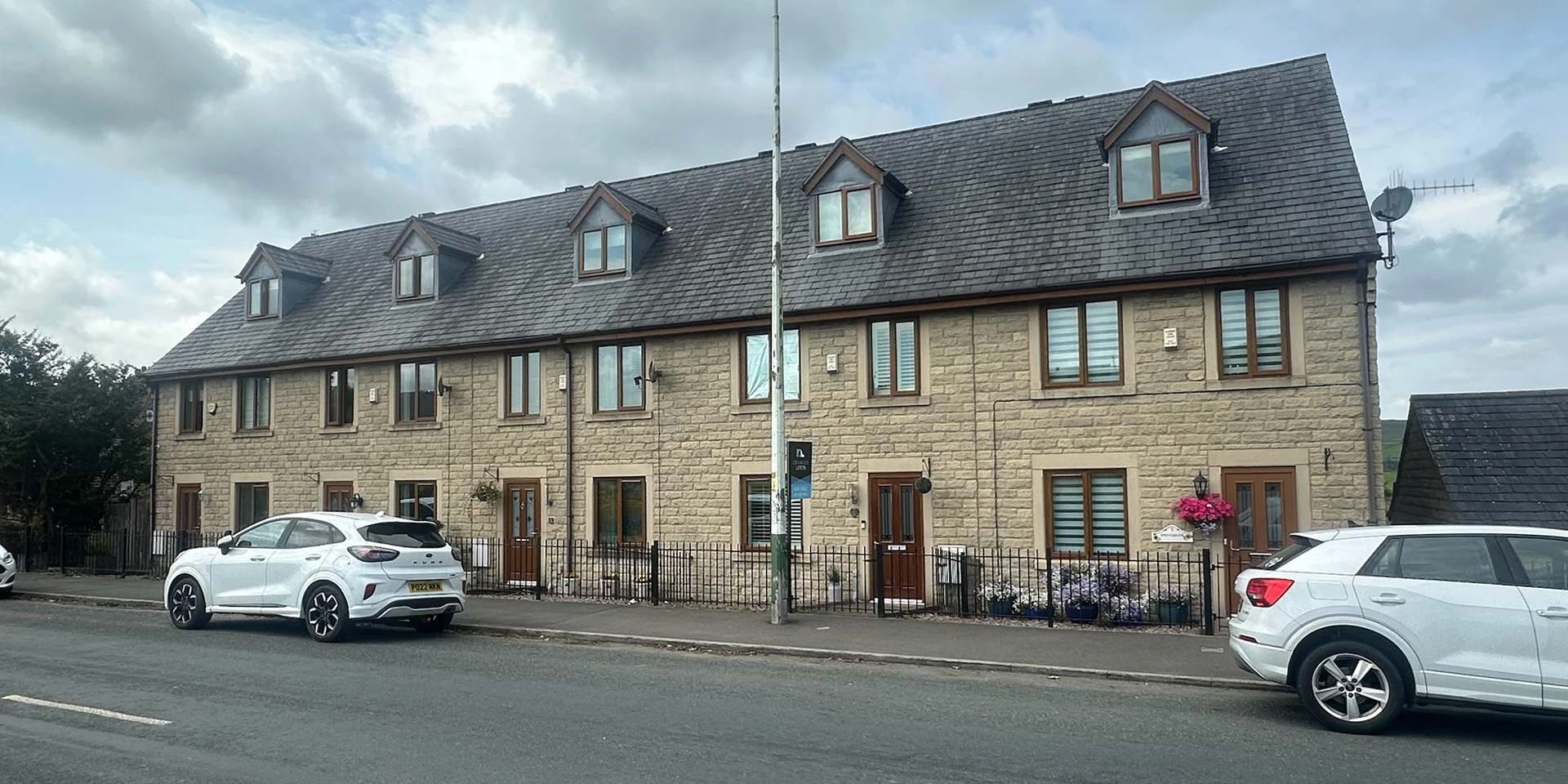
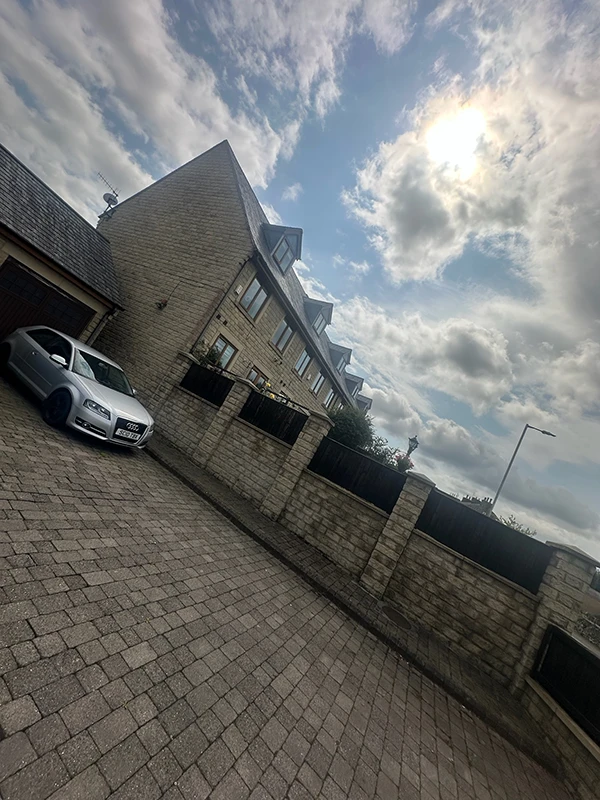
Scaffolding goes up safely, and we protect windows, doors, paths and gardens before work starts. On busy streets we arrange any licences needed.
Repairs come first, then the new finish – render, cladding, pointing or paint – applied in the right conditions, so it cures properly and lasts.
We inspect the work with you before the scaffolding comes down, put right anything that isn’t perfect and leave the site clean.
Catching problems early keeps the cost down. Look out for:
Most like-for-like repairs, repointing and repainting don’t need planning permission. Changing the appearance of a building, such as rendering or cladding brick or stone walls, can need it in conservation areas, on listed buildings and where permitted development rights have been removed. The Planning Portal explains the rules.
Building Regulations can also apply when render or cladding covers a large part of a wall, because insulation standards may come into play. We’ll check what applies before work starts.
Every building is different, but the cost of external refurbishments usually depends on:
Doing several jobs while the scaffolding is up is usually the most cost-effective approach.
Much of Rossendale and East Lancashire is built from local sandstone, and these buildings need different treatment from modern brick homes. Stone walls need to breathe, so cement render and hard cement pointing can trap moisture, leading to damp inside and stone faces flaking away. On older properties we use lime-based mortars and renders where they’re appropriate, and repair stone with matching material rather than covering it up.
External work is a good opportunity to make a building warmer. External wall insulation can be added under a new render system, and roofs can be insulated when they’re being re-covered. If more than a quarter of a wall or roof is being renovated, Building Regulations may require insulation to be improved where it’s practical, and we’ll explain what that means for your project.
Repointing means raking out old, failed mortar to a sound depth – typically at least 15mm – and replacing it with new mortar finished to suit the building. The mortar should always be slightly softer than the brick or stone, so that any movement or moisture is taken by the joints, which can be renewed, rather than the masonry itself. Done properly, repointing can keep a wall weathertight for decades.
Many external problems start with rainwater. Blocked or leaking gutters and broken downpipes soak the wall below, wash out mortar and cause damp inside. Replacing rotten fascias and soffits, refixing gutters to the right fall and making sure downpipes discharge properly is often the cheapest way to protect a building, and it’s easiest to do while the scaffolding is up for other external refurbishments.
A good render system, applied properly to a sound wall, can last for decades with only occasional cleaning and maintenance. Most early failures come from poor preparation or render applied over an underlying problem.
Usually, yes. Lime mortar is softer and more breathable than cement, so moisture can escape through the joints rather than the stone. Hard cement pointing on old stone can trap water and damage the stone faces over time.
Not on its own. Damp has a cause – failed pointing, leaking gutters, high ground levels or bridging – and that needs fixing first. Rendering over a damp wall can make things worse by trapping the moisture in.
For most work above ground-floor level, yes. It’s the safest way to work at height and gives a stable platform for a quality finish. We include it in the quote.
In most cases. We source reclaimed or new materials that match the colour, size and texture of the original, and match the mortar and joint style too.
A single elevation might take a week or two, while a whole house with scaffolding, repairs, render and roofline work can take several weeks. Weather affects rendering and pointing, so we build in some flexibility and keep you updated.
Yes. As well as homes, we carry out external refurbishments on shops, offices and mixed-use buildings, and we can plan the work to keep disruption to tenants and customers to a minimum.
It can, but on older stone buildings it’s often not the best choice, because the wrong render can trap moisture in the wall. Repairing and repointing the stone is usually better, or a breathable lime render where render is the right answer.
On solid-walled homes it can make a big difference to comfort and heating bills, especially when the walls need re-rendering anyway. It changes the appearance of the building, so it may need planning permission, and we’ll check before recommending it.
We carry out external refurbishments across Rossendale, East Lancashire and Greater Manchester. See all the areas we cover.
We work across Rossendale, East Lancashire and Greater Manchester, including Rossendale, Rawtenstall, Haslingden, Bacup, Accrington, Burnley, Bury and Bolton. See all the areas we cover, or get in touch for a free quote.
